Goal of Worcester firefighters’ memorial losing luster as fundraising falters – Worcester Telegram
See on Scoop.it – philanthropy

Goal of Worcester firefighters’ memorial losing luster as fundraising falters Worcester Telegram As of the foundation’s most recent tax return, for 2012, the group had $115,152 in net assets and ran a $44,580 deficit for the year, raising $27,549…
See on www.telegram.com
What donors want – and how to give it to them!
Too often, the only question a fundraiser has about a prospective donor is: “How much can I ask him for?” When we don’t focus on the passions and vision of donors, we are leaving a lot of money on the table . . . But many fundraisers are unskilled and lacking in confidence on how to talk about these deep, personal issues.
 Join Laura Waller as she focuses on a few pages from Micheal J. Rosen’s Book – Donor-Centered Planned Gift Marketing. We will discuss What People Want – and how to give it to them! Gain the clarity that leads to increased income for your nonprofit . . .
This is an online web call – call instructions will be sent to you in a follow up email prior to the call.
Everyone who signs up can claim a FREE 1/2 hour of coaching with Laura.
Who is encouraged to attend? – development directors, board members, volunteers. Also – any advisors who are interested in helping their clients plan their future on purpose, with purpose
sign up at Eventbrite – http://tinyurl.com/kspbf9m
Do American Philanthropists Lead the Global Ranking of Individual Giving?
See on Scoop.it – philanthropy

The answer to this question is yes, though not by a very high margin. The “2014 BNP Paribas Individual Philanthropy Index,” which measures commitment of individual philanthropists, reveals that out of the highest possible total score of 100, the United States scores 53.2; Europe, 46.3; Asia, 42.4; and the Middle East, […]
What do you think of this ranking system? How important is it to score philanthropic efforts by nation? What is the definition of effective and impactful philanthropy anyway?
See on www.forbes.com
New York City’s 20 Most Significant Young Philanthropists
See on Scoop.it – philanthropy
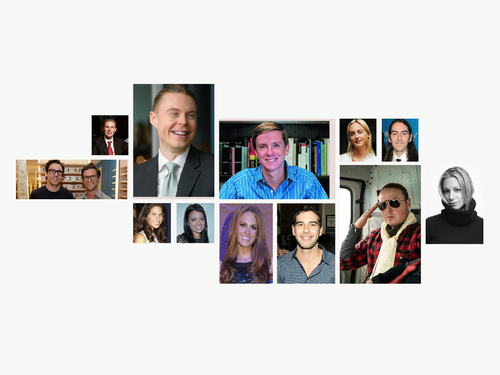
This is a group that not only operates within the gilded philanthropy sphere but fulfills its true ambition.
Does this group represent the next phase of philanthropy? If so, how will fundraisers adapt?
See on observer.com
End self-sabotage in fundraising
We had a great call last week and discussed several key issues that nonprofits experience. If you missed it, I uploaded the file on slideshare –
Contact me to schedule a time to go through this that would be convenient for you. You can also schedule a Huddle with me to talk 1-on-1 about your organization’s unique situation and how you can take purposeful action immediately to drive revenue growth.
4 Valuable Lessons Nonprofits Can Learn from For-profits
This is an excellent historical post from Michael Rosen’s Blog. Those of you who are nonprofit leaders and fundraisers – do you study the for-profit world? If so, what have you learned? If not, do you think you should start?

Under promise, and over deliver.
I ordered a roast-beef sandwich to go from Au Bon Pain. While I’m not a frequent Au Bon Pain customer, I’ve been one for many, many years. I was looking forward to my sandwich. When I got home, I unwrapped my lunch, and took a big bite. Something wasn’t right. I spit out the bite. There was a piece of paper. I opened my sandwich and found a sheet of deli paper!
 Ok, if you make thousands of sandwiches, you’re bound to a make a mistake sooner…
View original post 1,495 more words
Camels and Cows-End the Self-Sabotage in Fundraising
 There’s nothing wrong with wanting cows . . . unless you’re in the desert!

Many non-profits are sabotaging their own success in fundraising and aren’t even aware of it. They don’t understand the landscape and are frenetically pursuing a plan that won’t move them forward. Could you be one? . . . answer some of these questions:
-
How do you feel about current fundraising results overall?
-
How satisfied are you with the results of your Development Director? . . . your Board? . . . your own efforts?
-
How many champions do you have?
-
What does the donor database look like?
-
How many legacy gifts are in the pipeline?
-
How competent and experienced in business building is your development director? . . . Your board? . . . . You?
-
How many development professionals has your org had in the last 8 years? What is average tenure?
-
Have you created a caravan or a herd of cows?
Join Laura Waller-Miller on a free web call April 10, 2014 as she shares her own experience working with non-profit organizations and how they kill their own chances at undeniable success. We will examine the key reasons why non-profit organizations are still under-performing in their fundraising and how you can reverse the trend in your own group. For CEOs, Exec Directors, Board Members, Development Directors and non-profit leaders.
Even though this is a web call – space is limited – sign up NOW at Eventbrite
BONUS: everyone who signs up will receive a FREE handbook: Abundant Engagement. This outlines a strategy with a productive action plan for getting new money and resources in the door – IMMEDIATELY. No matter where you are in your fundraising journey, you can use what you have at hand to start on a path of even greater success.
Sign up HERE (Eventbrite) – The event is free, but you must register to attend the call and receive a copy of Abundant Engagement
Changes Ahead for Planned Giving?
Changes Ahead for Planned Giving?. I recommend that you check out – “Wills That Won’t – What the Decline of Wills and Estate Plans Means for Planned Giving Marketing” Some startling facts –
 1) According to national studies examined by Dr. Russell James of Texas Tech, people are using Wills less and less as their vehicle of choice for charitable estate gifts – and the actual amount actually distributed to charities through Wills is sharply lower than the amount that was predicted.
2) According to the 2012 Bank of America Study on high-net-worth philanthropy, more wealth families are using giving vehicles such as donor advised funds and private foundations
3) more than 20 states now allow for Transfer on Death deeds – in 1995, only ONE state allowed that. This means that real property can be distributed to others without a Will
4) For many people entering their 60s and 70s, their Wills are only the BACK-UP document. They use Living Trusts and beneficiary designations on an increased basis. This is true even for those who will have a gross estate under $5 million / $10 million.
So if you are a non-profit building a Bequest Program or Planned Gift Program, you need to consider how you approach donors. By focusing only on Wills and charitable bequest language for that specific type of estate planning vehicle, you may be leaving a lot of money on the table.
Dr. James recommends making sure that conversations include a discussion of beneficiary designations for retirement plan assets, life insurance, annuities etc. Donors should also be aware that they can make payable on death (POD) or transfer on death(TOD) designations for bank accounts, investment accounts, and real property.
Donors should consult with their financial planners and legal advisors about their specific estate plan arrangements. However, a nonprofit fundraiser can open up an opportunity for future increased revenue by taking gift planning discussions beyond Will bequests. Check out MarketSmart’s blog and Dr. James’ video on the topic (link is above).
5 Undeniable Truths of Successful Fundraising
 Last year, CompassPoint and the Evelyn and Walter Haas, Jr. Fund conducted a study of the real challenge facing the development and fundraising efforts of nonprofit organizations. The main theme I noticed was that all of the underlying causes of decline in revenue were internal to the organization. Every problem, obstacle or challenge that the study researched has a solution that the organization could work on, control and manage. Nonprofit organizations can no longer embrace the idea that a “bad economy” or some other outside circumstance is the cause of their struggle. The answers to the challenges definitely begin with work from the inside out. If you want your organization to raise more money, foster new partnerships and widen the network of support then you must shift your attitude from a scarcity mindset to an abundance mindset. It also means that the accountability is focused squarely on the shoulders of ALL the people in the organization.
In a recent presentation, I discussed the main challenges and some general solutions to overcoming the obstacles that are preventing nonprofits from enjoying undeniable success in their fundraising.
See the slides from this presentation that I gave for a group of leaders responsible for development and advancement in their organizations – on SlideShare
If you’re interested in a walk-through on this or a deeper discussion on some immediate strategies to execute NOW, please contact me.


Why Ben Horowitz doesn’t like hiring rich people
A key insight is in the very first question in this interview . . . . So many small or struggling non-profits are not creative, taking risks, setting more aggressive goals. That “bunker” mentality is hindering growth. Horowitz also discusses TALENT – this also is a key flaw in “underdeveloped” fundraising plans at many non-profits. Really talented fundraisers are difficult to find and retain.
I’m struck by the honest of Horowitz’s unique point of view – some food for thought for non-profit fundraisers.
 Unleashed Abundance